


When Water Safety Becomes National Security


For decades, water has been treated as a basic utility, something abundant, inexpensive, and largely invisible in strategic discussions.
That era is ending.
Quietly, but decisively, water is moving up the global agenda, from environmental concern, to economic driver, to national security priority.
And when that shift happens, everything changes.
From Utility to Strategic Asset
Water underpins every system we rely on:
Food production
Energy generation
Industrial output
Public health
Social stability
Yet unlike energy, it has been chronically underpriced, underprotected, and underinvested.
Now governments are waking up.
Water infrastructure is increasingly being treated alongside:
power grids
data infrastructure
transport systems
As critical national assets that must be secured, controlled, and future-proofed.

The Geopolitical Reality
Water is no longer just a domestic issue, it is geopolitical.
We are already seeing this play out:
Tensions around the Grand Ethiopian Renaissance Dam on the Nile River
Long-standing sensitivities across the Indus River between India and Pakistan
Structural shortages in the U.S. tied to the Colorado River
Control of water is increasingly tied to:
sovereignty
stability
leverage
History has shown us that resource scarcity rarely remains purely economic.

Economic Stability Starts With Water
Strip it back, and the equation is simple:
No water = No food No water = No industry No water = No stability
Water stress drives:
inflation
migration
civil unrest
Which is why governments are beginning to treat water security as preventative risk management at a national level.
Technology Will Define the Winners
This shift is accelerating investment into:
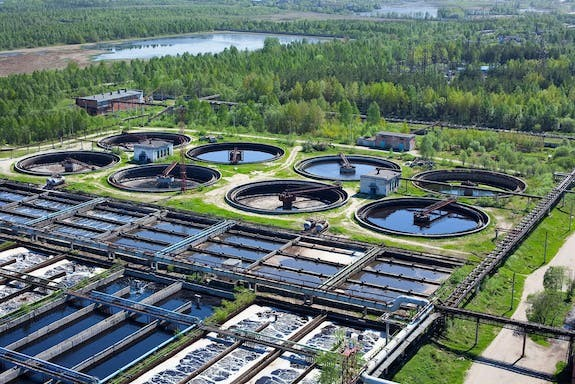
Advanced water treatment and purification
Desalination and reuse systems
Smart monitoring (AI + sensors + satellite data)
Decentralised and resilient infrastructure
Water is becoming digitised, optimised, and strategic.
And the gap between countries and companies that adapt, and those that do not, will widen quickly
From Innovation to Mission-Critical: The Role of Terra Azul Tech (TAT)
As water becomes a national security priority, the role of advanced solutions becomes central.
This is where technologies like Terra Azul Tech (TAT) come into focus.
TAT represents a new generation of water infrastructure:
Solar-powered systems
Advanced oxygen processes (O₃ / O₄)
Ability to eliminate contaminants at speed and scale
Enhancement of water quality for agriculture and ecosystems
What is important here is not just the technology itself, but its positioning.
Solutions like TAT move from:
“impact innovation”
to
strategic infrastructure capability
They offer:
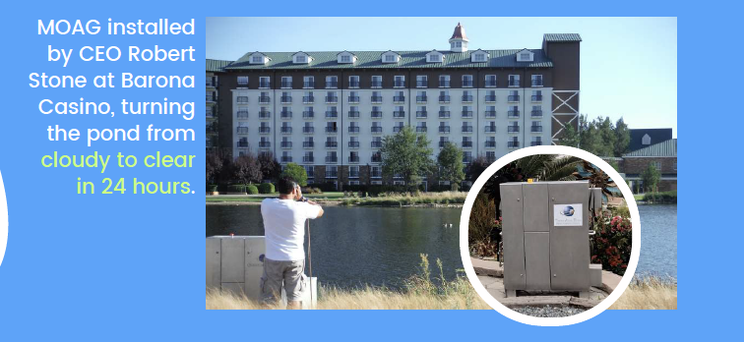
Faster remediation of polluted water sources
Lower energy dependency
Scalable deployment across municipalities, industry, and agriculture
In a world where water security is critical, the ability to restore and protect water systems efficiently becomes a national advantage.
The Investment Shift
This is where it becomes particularly interesting.
When something becomes a national security priority, it attracts:
long-term capital
policy support
institutional backing
We are seeing early signals of:
Sovereign funds allocating capital to water infrastructure
Family offices moving into real assets with impact
Public-private partnerships scaling globally
Water is moving from underpriced utility to strategic infrastructure to investable asset class
A Defining Decade Ahead
We are entering a decade where:
Water will shape economic resilience
Infrastructure will determine national strength
Technology will redefine access and efficiency
And importantly solutions that were once seen as impact-driven will become mission-critical.

Final Thought
Water is no longer just about sustainability. It is about security, sovereignty, and survival.
Those who understand this shift early, from governments to investors to operators, will not only mitigate risk
They will define the next generation of infrastructure.
Water is life.
And beyond infrastructure and investment, this is also about impact.
From water restoration and access, to humanitarian solutions like cooking bags that empower women across Africa, reduce fuel consumption, and improve health outcomes, to sustainable energy and the broader energy transition,
these are not separate conversations
they are deeply connected.
If you are working at the intersection of water, life, and real-world impact, or exploring projects that combine purpose with scalable solutions
let’s connect!
Sten A. Rigedahl


Comments