


🌍 GLOBAL INDUSTRIAL INNOVATION: CONNECTING PEOPLE, TECHNOLOGY, CAPITAL AND OPPORTUNITIES
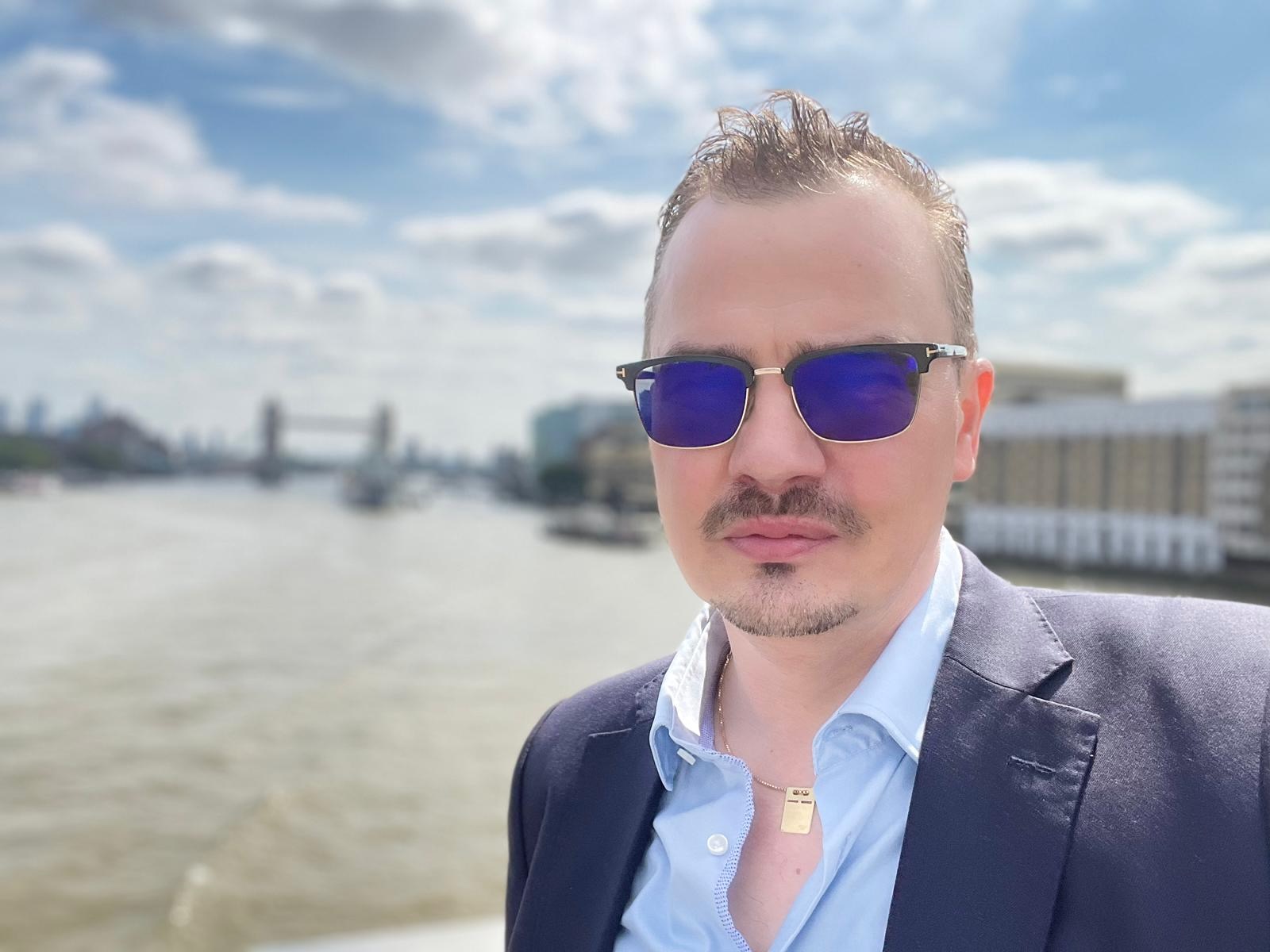

Reflections from the Global Industrial Innovation and Development Forum | London, 23 October 2026
The future is not built in isolation. It is built through collaboration, innovation, trust and the courage to think beyond borders.

I recently had the pleasure of attending the Global Industrial Innovation and Development Forum, hosted at the Institution of Engineering and Technology (IET) in London.
An inspiring gathering of business leaders, investors, entrepreneurs, academics and innovators exploring some of the most transformative opportunities and challenges shaping our future.
From UK–China cooperation and artificial intelligence to robotics, maritime energy, digital finance, investment and the psychology of innovation, the discussions reinforced something I have believed throughout my international career:
We have extraordinary technologies, ideas, talent and capital around the world. The real opportunity is connecting them and turning potential into meaningful impact.

Here are some of my key takeaways and personal reflections.
🇬🇧 🇨🇳 1. UK–China Collaboration: Building Bridges, Not Barriers
One of the central themes was the importance of strengthening UK–China cooperation through pragmatic engagement, commercial partnerships and mutual understanding.
We heard examples of how this collaboration is already delivering tangible results.
Geely's investment in the London Electric Vehicle Company and the partnership between BYD and Alexander Dennis demonstrate how combining Chinese manufacturing capabilities with British engineering, design and market knowledge can generate real commercial opportunities.
China's RMB 6 billion sovereign green bond issuance in London in April 2025, reportedly around seven times oversubscribed, also illustrates the potential of connecting international capital with sustainable development.
For me, the opportunity goes well beyond bilateral trade.
It is about combining complementary strengths:
British research, innovation, financial services and international networks.
Chinese industrial capacity, manufacturing, engineering and ability to scale.
International investors and strategic partners capable of bringing projects from concept to commercialisation.
The question is not who can do everything alone, but what we can achieve together.

🤖 2. Artificial Intelligence: Technology Is Only Part of the Challenge
AI was naturally at the centre of many discussions.
One particularly interesting perspective came from Daniel Hu, who highlighted why so many organisations struggle to implement AI successfully.
His central message was that developing the software is only a small part of the challenge.
The real difficulties involve implementation, organisational transformation, domain expertise and understanding which problems are genuinely worth solving.
Three points particularly resonated with me:
Start with the problem, not the technology.
Combine deep technical expertise with real industry experience.
Focus on sustainable competitive advantage rather than chasing quick wins.
Another important discussion concerned AI governance.
Many boards still approach AI primarily as an IT issue rather than a strategic, ethical and governance responsibility.
Yet the questions directors should be asking are much broader.
Who is accountable for AI risk?
How does AI support the company's long-term strategy?
What are the implications for employees, customers, society and investors?
And who ensures that innovation remains aligned with human values?
My reflection is simple:
AI should amplify human intelligence, creativity and potential, not replace our responsibility to think, question and lead.

🦾 3. Robotics: From Artificial Intelligence to Physical Intelligence
One of the most fascinating developments discussed was the convergence of AI, robotics and industrial automation.
IIMT presented developments in intelligent welding and collaborative robotics, including systems that combine vision, movement, manipulation and real-time adaptive decision-making.
The applications extend beyond manufacturing into logistics, cleaning, hospitality and potentially healthcare and elderly care.
A particularly important challenge is the ageing industrial workforce and the shortage of younger skilled professionals entering certain trades.
This raises a broader question.
How can robotics help address labour shortages, improve productivity and create better working environments while also preparing people for new opportunities?
The future should not simply be about replacing human labour. It should be about enabling people to achieve more, work more safely and contribute in new ways.

🌱 4. Clean Energy and Maritime Innovation: Rethinking What Is Possible
As someone actively involved in energy, water, infrastructure and sustainable technologies, I found the maritime energy discussion especially interesting.
Advanced Wing Systems presented an innovative distributed wind energy concept designed to reduce fuel consumption and emissions in shipping.
The company described modular systems that can potentially be installed without major dry-dock modifications, with a proposed commercial model based on measured energy savings.
Its presentation cited a target delivered energy cost of approximately $30/MWh, subject to successful commercial validation.
What particularly interested me was the international development model.
Technology development, prototyping, manufacturing and commercial deployment are taking place across different countries and partnerships.
This is a powerful example of what global innovation can look like.
Innovation does not have to originate, be financed, manufactured and commercialised in the same country.
The best solutions can emerge when we connect the strongest capabilities wherever they exist.

💰 5. Innovation Corridors: Connecting Capital, Technology and Markets
One of my favourite discussions came from Blueverse Ventures and its concept of international innovation corridors.
The idea is both simple and powerful.
Imagine combining:
A breakthrough technology developed at a European university.
Chinese manufacturing expertise and industrial scale.
Investment capital from Hong Kong, Europe or international family offices.
Commercial partnerships that provide access to new markets.
The result can be far more valuable than any individual component.
However, as we discussed, successful collaboration involves more than making introductions.
Intellectual property, financing, corporate governance, commercial agreements, revenue sharing and execution all need to be structured correctly.
This is precisely where strategic advisory, international networks and experienced investment partners can create substantial value.
Having spent more than two decades connecting entrepreneurs, investors, family offices, technologies and businesses internationally, I see enormous potential in this approach.
Capital alone does not build successful companies. Neither does technology alone.
It is the combination of people, expertise, capital, strategy and execution that transforms opportunities into sustainable businesses.

💳 6. Stablecoins, Digital Finance and Financial Inclusion
Another thought-provoking discussion explored how stablecoins, decentralised finance and blockchain technologies are challenging traditional financial infrastructure.
Enrique Nord highlighted the extraordinary speed at which new financial platforms can develop and scale.
The potential for near-instant international transfers, lower transaction costs and programmable financial services creates opportunities far beyond financial speculation.
Perhaps one of the most meaningful applications is financial inclusion.
Millions of people around the world still face barriers to accessing banking and financial services.
Could digital financial infrastructure help democratise access to payments, savings, investment and economic opportunity?
Potentially, yes.
However, responsible adoption also requires effective regulation, security, consumer protection and governance.
For me, the most interesting question remains:
How can technological innovation make financial systems more accessible, efficient and inclusive for humanity?

❤️ 7. Emotions, Creativity and Human Connection
Perhaps the most personally interesting discussion came towards the end of the forum.
An academic perspective from LSE explored the relationship between emotions, creativity and innovation.
We often associate innovation with intelligence, logic, technology and analytical thinking.
But emotions play an equally important role.
Positive emotions can broaden our thinking, encourage exploration and open us to new perspectives.
Negative emotions can help us recognise problems, challenge assumptions and develop the persistence needed to overcome obstacles.
This resonates deeply with my own philosophy and experiences.
Our greatest ideas do not always emerge from spreadsheets, algorithms or boardrooms.
Sometimes they emerge from curiosity.
From passion.
From unexpected conversations.
From challenges we have overcome.
From genuinely connecting with another human being.
Technology can process information, but human connection gives innovation meaning and direction.
And perhaps this is something we should remember as AI becomes increasingly integrated into our lives.

🌍 8. My Biggest Takeaway: From Conversations to Action
What struck me throughout the forum was how interconnected all these subjects have become.
AI drives demand for computing infrastructure and energy.
Advanced manufacturing depends on robotics, materials and intelligent systems.
Clean technologies require capital, industrial partnerships and access to international markets.
Digital finance creates new possibilities for global transactions and investment.
And behind all these developments are people.
People with ideas.
People with expertise.
People with resources.
People with the ambition to make a difference.
The challenge is bringing them together and creating the structures, relationships and trust needed to move forward.
This is also what drives much of our work at Stone Capital Group.
Connecting people, capital, innovation and opportunities across sectors and borders, with a particular focus on energy, water, healthcare, infrastructure, technology and projects capable of generating both commercial returns and positive social impact.

✨ A Personal Reflection
I always leave events like this feeling energised.
Not simply because of the technologies presented or the investment opportunities discussed.
But because of the people I meet, the perspectives I discover and the friendships that begin.
I believe that every meaningful connection has the potential to create something extraordinary.
Sometimes a single conversation can change the direction of a business, unlock a project, create a partnership or inspire an entirely new idea.
And sometimes its greatest value is simply bringing two people together who otherwise would never have met.
One phrase from the forum particularly stayed with me:
"A handshake makes a photograph. What happens afterwards makes a story."
How true.
Because the real measure of a successful conference is not how many people attended, how many presentations were delivered or how many business cards were exchanged.
It is what happens afterwards.
The partnerships we build.
The ideas we develop.
The investments we enable.
The problems we solve.
And ultimately, the positive impact we create.
For me, business has never been only about profit. It is about people, purpose, opportunities and leaving something meaningful for the next generation.
Thank you to the organisers, speakers and everyone I had the pleasure of meeting and exchanging ideas with. Thank you for inviting me.
I look forward to continuing the conversations and transforming connections into collaborations, ideas into businesses and innovation into meaningful impact.
The future belongs not only to those who innovate, but to those who collaborate.
And together, we can achieve far more than we ever could alone.

Sten André Rigedahl Director | Stone Capital Group Strategic Advisor | International Business & Investment | Super Connector
🌍 Connecting People • Capital • Innovation • Opportunities 💚 Purpose Beyond Profit
Let's connect, collaborate and create meaningful impact.
I welcome conversations with entrepreneurs, investors, family offices, technology innovators, strategic partners and anyone passionate about creating positive change.📩 Contact me via LinkedIn private message (PM) or email: sten@stonecapital.uk


Comments